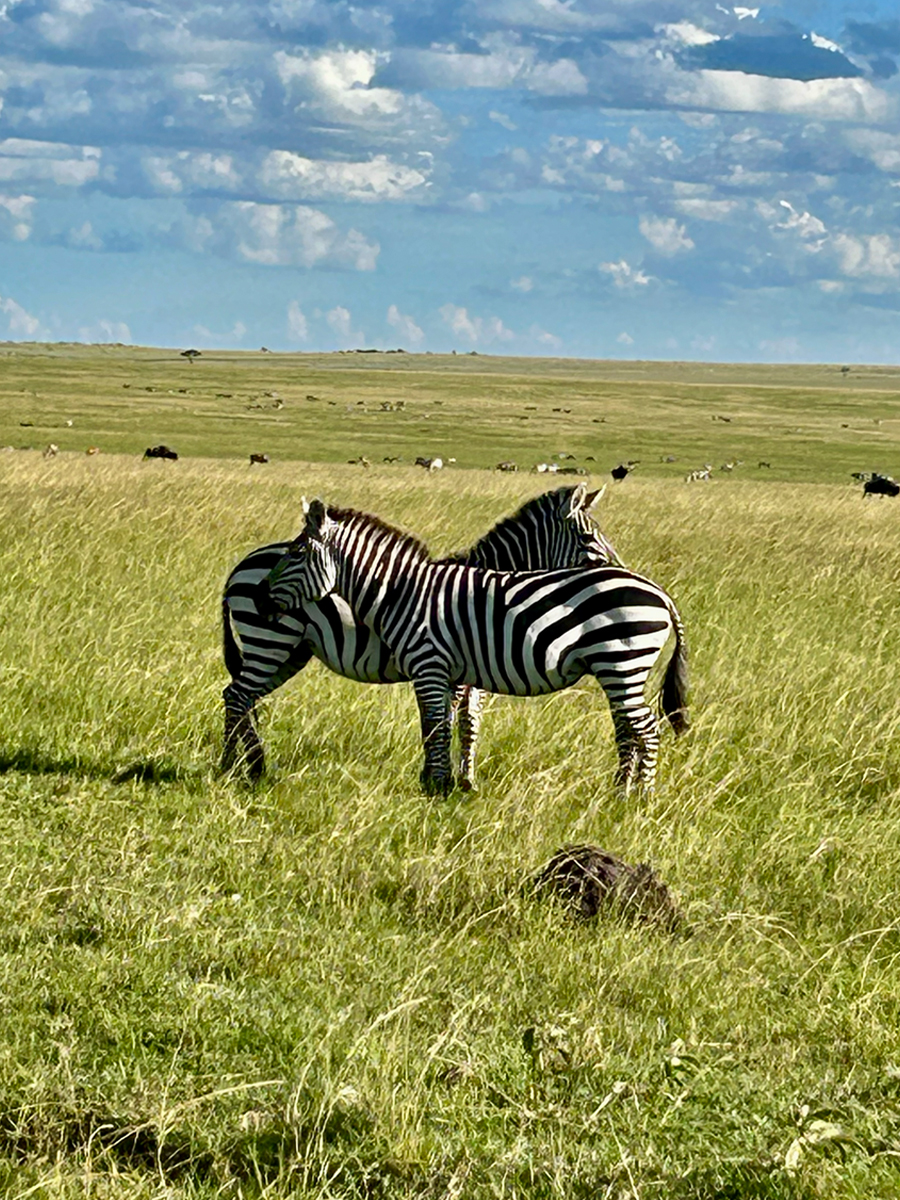
Two zebras standing tip to tail in the foreground with a background of green grasses and blue sky.

About the Journal

Canadian Food Studies / La Revue canadienne des études sur l’alimentation is the open-access, online journal of the Canadian Association for Food Studies. As diverse and entangled as the subject of food itself, CFS/RCÉA provides a critical resource to those interested in the myriad ways in which humans, food, and the natural and built environments come to construct one another.

Announcements

CFS/RCÉA Moves to Diamond Open Access

2026-03-18

Canadian Food Studies / La Revue canadienne des études sur l’alimentation (CFS/RCÉA) is pleased to announce that the journal is moving to a Diamond Open Access (OA) publishing model in our efforts to remove financial barriers for authors, enhance equity and diversity, and promote knowledge as a public good. 

This means that all articles will continue to be freely available under an open Creative Commons licence without subscription fees and the journal will be removing all fees charged to authors (also known as article processing charges or APCs). This new policy is in effect for articles accepted for publication as of March 16, 2026.

CFS/RCÉA invites authors to submit articles that fall within the scope of the journal. See author submission guidelines for more details. 

Look for the upcoming CFS/RCÉA issue in mid-April.

Read more about CFS/RCÉA Moves to Diamond Open Access

Current Issue

Vol. 13 No. 2 (2026): Finding Allies
Two zebras standing tip to tail in the foreground with a background of green grasses and blue sky.

Emily Dickenson wrote: “To make a prairie it takes a clover and one bee.”

As Geneviève Boudreau observes in her own urban garden and notes in her field journal/collection of poetic essays, Une abeille suffit, the association between red clover and bumblebee is a close one. The former is a principal food source for the latter. And that latter is the principal pollinator of this self-sterile flower, attracted as it is by the shape of its florets and by its sweet scent. Together, bee and plant transform Boudreau’s twelve square meters of lawn into a prairie.

They are allies. A clover. One bee. Such a small scale with such tremendous consequences.

Allyship and solidarity are at the centre of this issue, starting with our cover image. Apparently, zebras often stand this way, tip to tail as it were, so that they can have a shared 360° view of the savanna, and thus protect each other from predators.

Co-Managing Editor David Szanto posits that it looks like the zebras are smelling each other. Read his editorial to find out why this kind of sensual engagement matters.

In a similar vein, the articles in this issue explore allyship in many forms. It shows up in methodology where, for instance, researchers who position themselves as members of their research population decide to co-interview each other. (See Da Costa and Tremblay.)

It also appears in an analysis the alliance between agricultural support policies on the one hand and high-income farmers on the other. (See İşcan et al.) With its focus on “increasing volumes and export competitiveness of a small range of feed crops, food grains, and livestock production”, this is a powerful partnership that ultimately serves few, and with high environmental costs. And, on the heels of a pan-Canadian, bilingual food insecurity event Knezevic et al. take pains to unpack the challenges and opportunities that come out of another type of allyship, between community and academia.

We invite you to read through this issue with these themes in mind, being attentive to the stakes at play around the matter of Finding Allies.

Bonne lecture !


Boudreau, G (2024). Une abeille suffit : Carnet d’observation d’un jardin urbain. Noroît.

Published: 2026-08-27

Editorial

Research Articles

The Choux Questionnaire

View All Issues