Vol. 13 No. 1 (2026): Transition, Change, Tradition, Terrain
We also passed Beechville, [sic] a small, but beautiful village, round which the soil is reckoned very fine and fertile; a number of most respectable settlers have recently bought land and erected houses here. The next place we came to was Oxford, or rather Ingersol [sic], where we stopped to dine and rest previous to plunging into an extensive forest called the Pine Woods.
Oxford is a little village, presenting the usual saw-mill, grocery store and tavern, with a dozen shanties congregated on the bank of the stream, which is here rapid and confined by high banks.
- Anna Brownell Jameson, Winter Studies and Summer Rambles in Canada
Anna Brownell Jameson spent the summer of 1837 travelling around southwestern Ontario. Apart from its built environment and geographical particularities—the stream she describes is perhaps a narrow portion of the Thames River?—Brownell Jameson remembers Ingersoll for the food. She describes “a good dinner, consisting of slices of dried venison, broiled; hot cakes of Indian corn, eggs, butter, and a bowl of milk”. Ingersoll is this managing editor’s hometown and Oxford, her home county. I am pleased to note its well-stocked pantry. And yet, this exercise in travel writing, now nearly two hundred years old, has the effect of defamiliarizing this familiar patch of land. What makes Beachville settlers particularly respectable? Are they socially acceptable or of good standing, as Brownell Jameson is likely suggesting? If we consider this passage in the context of Indigenous reconciliation, what do we then make of such notions as “respectful settlement” or “buying land” with their contradictions and more-than implications of domination? And did much of that extensive forest pass through the sawmill to make way for farmland? In other words, in what ways was this patch being claimed and adapted? And to what gain or cost? How might we find nuance in this touristic account? Such is the (time) traveller’s prerogative – to describe, to seek fresh perspectives, to wonder about home while writing away.
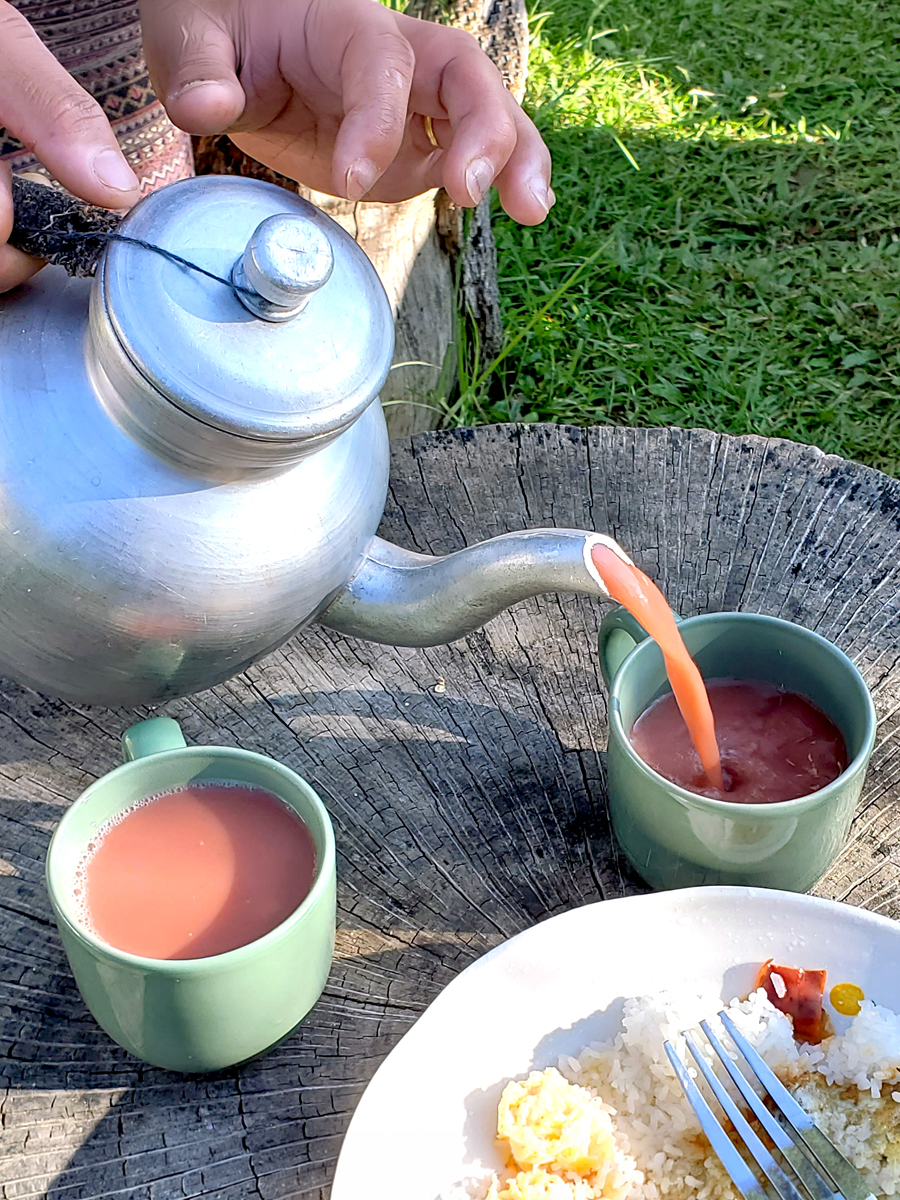
Ellen Desjardins’s editorial is a similar exercise in translation. She uses her recent travels to Bhutan as way to think through the articles in this issue and the crossovers between food systems in Bhutan and Canada. Like Brownell, Desjardins knows what it is to lay in a good meal, trading in Ingersoll’s bowl of milk for a cup of savoury yak butter tea.
Bonne Lecture